Skip to content
Data center construction workers participating in onsite safety training during facility buildout
Onsite safety training helps data center construction teams stay prepared as projects move from buildout to operations.

Data Center Construction Safety Training: What Your Workforce Needs

The Data Center Safety Series — Part 1

Data centers are becoming a larger part of the country’s construction and energy landscape. That growth creates a practical question for owners, general contractors, and subcontractors: **what safety training does a data-center construction workforce need?**

The answer is not one generic safety class. A strong program starts with a clear site orientation, then builds task-specific training and field support around the work crews will actually perform.
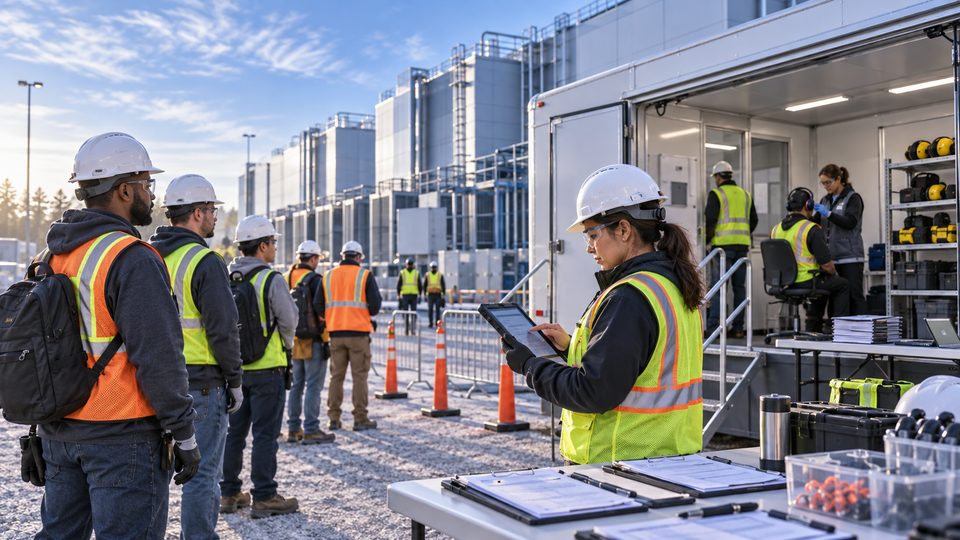
 

Start with a site-specific orientation

Every data-center project has its own access rules, emergency procedures, traffic patterns, restricted areas, PPE expectations, reporting process, and schedule pressures. A site orientation sets the baseline before a crew begins work. It should help workers understand the jobsite, not simply sign a form.

For a safety leader, that means answering practical questions early:

- Where do workers enter and stage?
- Who communicates a changing condition?
- How are emergency routes identified?
- What work requires a permit or special authorization?
- What happens when another trade’s activity creates a new hazard?

When expectations are clear, crews spend less time guessing and supervisors spend less time correcting preventable misunderstandings.
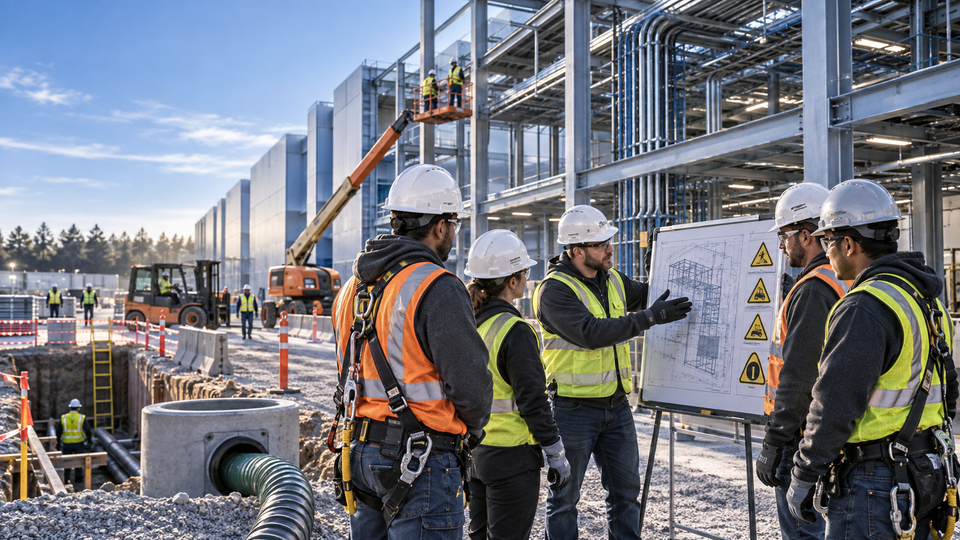
Safety instructor training data center construction workers on fall protection, excavation and jobsite hazards
Training should address the changing hazards workers encounter throughout a data center construction project.

Train for the hazards that accompany the build

Data-center construction can include elevated work, excavation, lifting and rigging, equipment operation, temporary power, mechanical installation, electrical work, confined-space conditions, and heavy coordination among trades. These are not new safety categories, but the number of activities occurring at once makes disciplined planning essential.

OSHA’s construction Focus Four provides a useful baseline: falls, struck-by hazards, caught-in or between hazards, and electrocution. On a data-center project, safety training should bring those categories down to the crew level.

What does the fall-protection plan look like for today’s work? Who is responsible for the lift? Where can people safely walk when equipment is moving? What changes when temporary power, tools, or energized systems enter the area?

25/8 Safety can support practical instruction around:

- OSHA training
- Competent-person responsibilities
- Fall protection
- Confined space
- Excavation and trenching
- Rigging and signaling
- Equipment and operator certifications
- First aid and CPR
- Safety orientations

The right mix depends on the scope of work and the project phase.
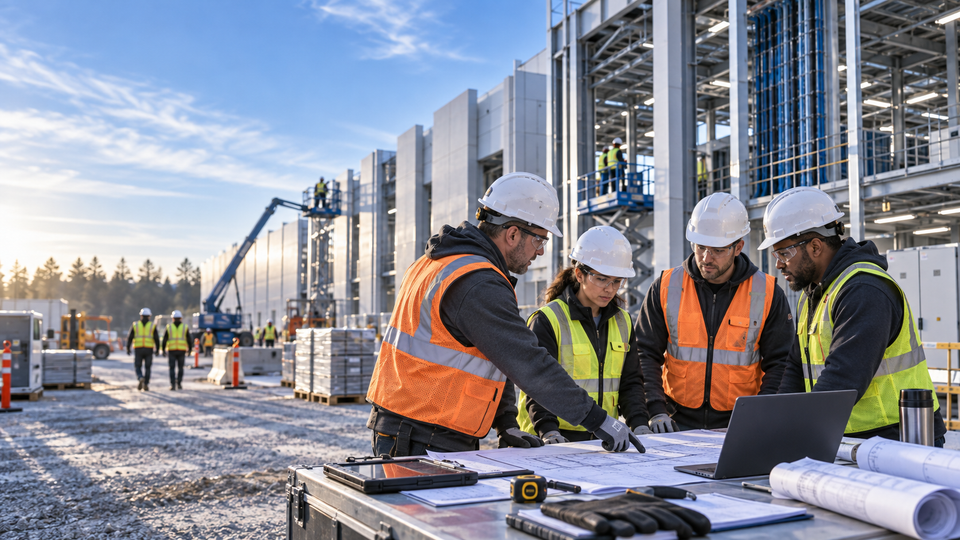
Safety coordinator managing worker training, certifications and onsite testing at a data center project
Organized training, certifications, orientations and testing help keep data center workforces ready for the jobsite.

Keep workforce readiness organized

On a fast-moving project, workforce readiness is not a one-time event. New people arrive. Work areas change. Equipment changes. A planned schedule for orientations, refresher training, fit testing, and supervisor support helps keep safety aligned with the project rather than trailing behind it.

Onsite respirator fit testing can be one part of that plan for teams required to use tight-fitting respirators. It should be coordinated within the employer’s respiratory-protection program, including the required medical evaluation and training. Onsite support can reduce the logistical burden of moving large crews away from the project.

Build the program around the project, not a catalog

    The best training plan is built around the workforce, the work sequence, and the site’s expectations. A project may need a large new-hire orientation at the start, focused fall-protection training before elevated work begins, rigging training before critical lifts, and recurring safety support as the project advances toward commissioning.

    25/8 Safety helps project teams organize those needs into a practical plan. The goal is a workforce that arrives prepared, understands the hazards, and has the support to keep working safely as conditions change.
    Adobestock 105123116

    Plan Your Data Center Safety Program

    Planning a data-center build or expanding a critical-infrastructure workforce? 25/8 Safety can help you build a site-specific training and safety-support plan around your project phases, crew needs, and work conditions.

     
    Contact 25/8 Safety to start the conversation

    Bringing Safety Training to the Jobsite

    As data center construction moves from early development through commissioning and full operations, safety requirements continue to change. 25/8 Safety can support that entire process with onsite training, operator certifications, fit testing, hearing testing, safety orientations, operator qualification (OQ), ongoing training, and safety support—helping companies keep their workforce trained without unnecessarily pulling employees away from the jobsite.
    And data centers are only one part of the industries we serve.
    Next in this series:
    Part 2: Onsite Safety Training for Industrial Facilities
    Learn how onsite safety training can help industrial facilities manage certifications, OSHA requirements, equipment training, fall protection, confined space, and other critical workforce safety needs.
    Part 3: Safety Training and Workforce Support for Refineries
    See how 25/8 Safety can support refinery contractors and employees with specialized training, qualifications, testing, and ongoing safety programs.
    Whether you’re building a data center, operating an industrial facility, or supporting refinery operations, 25/8 Safety can bring the training and safety resources directly to your workforce.
    Contact us for more information